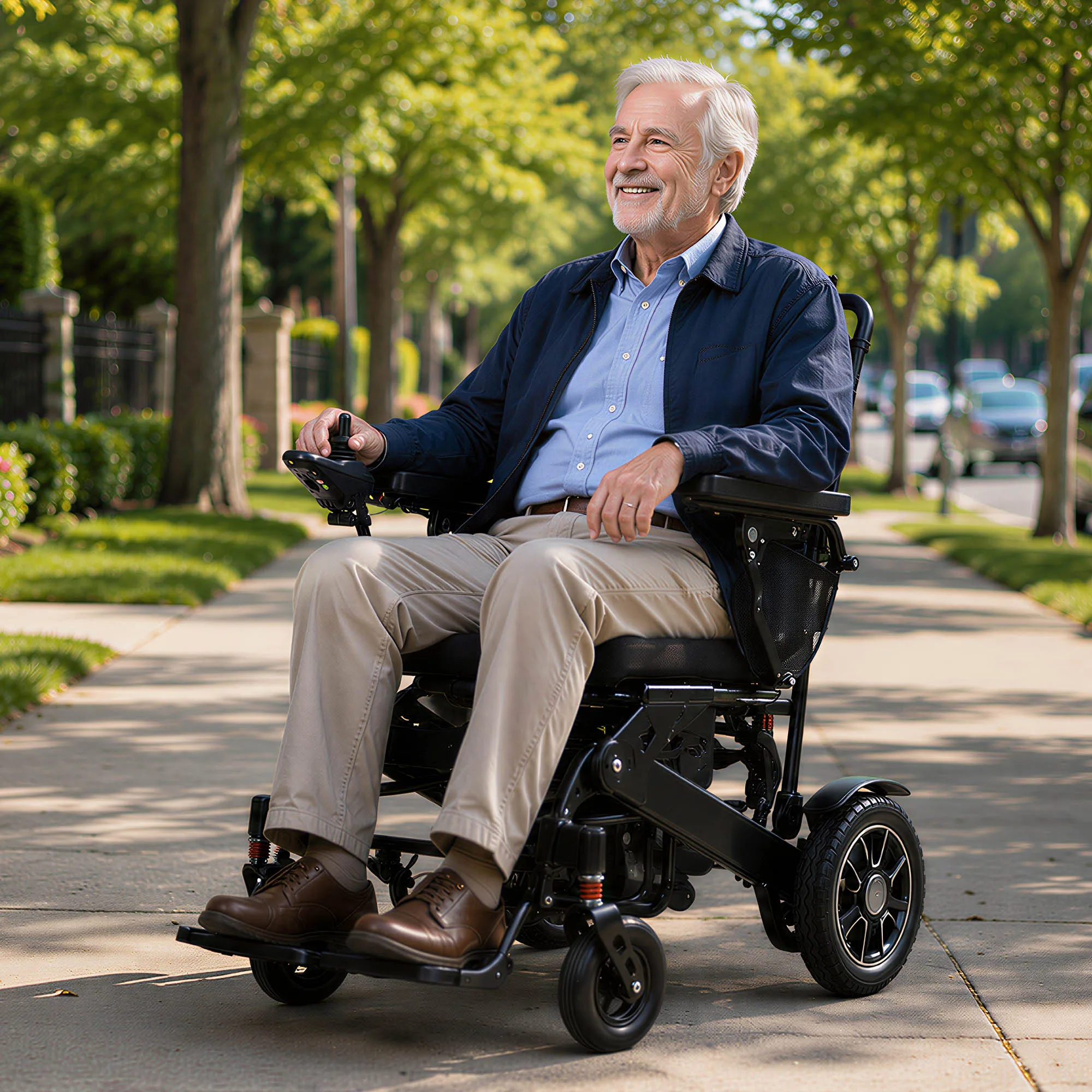
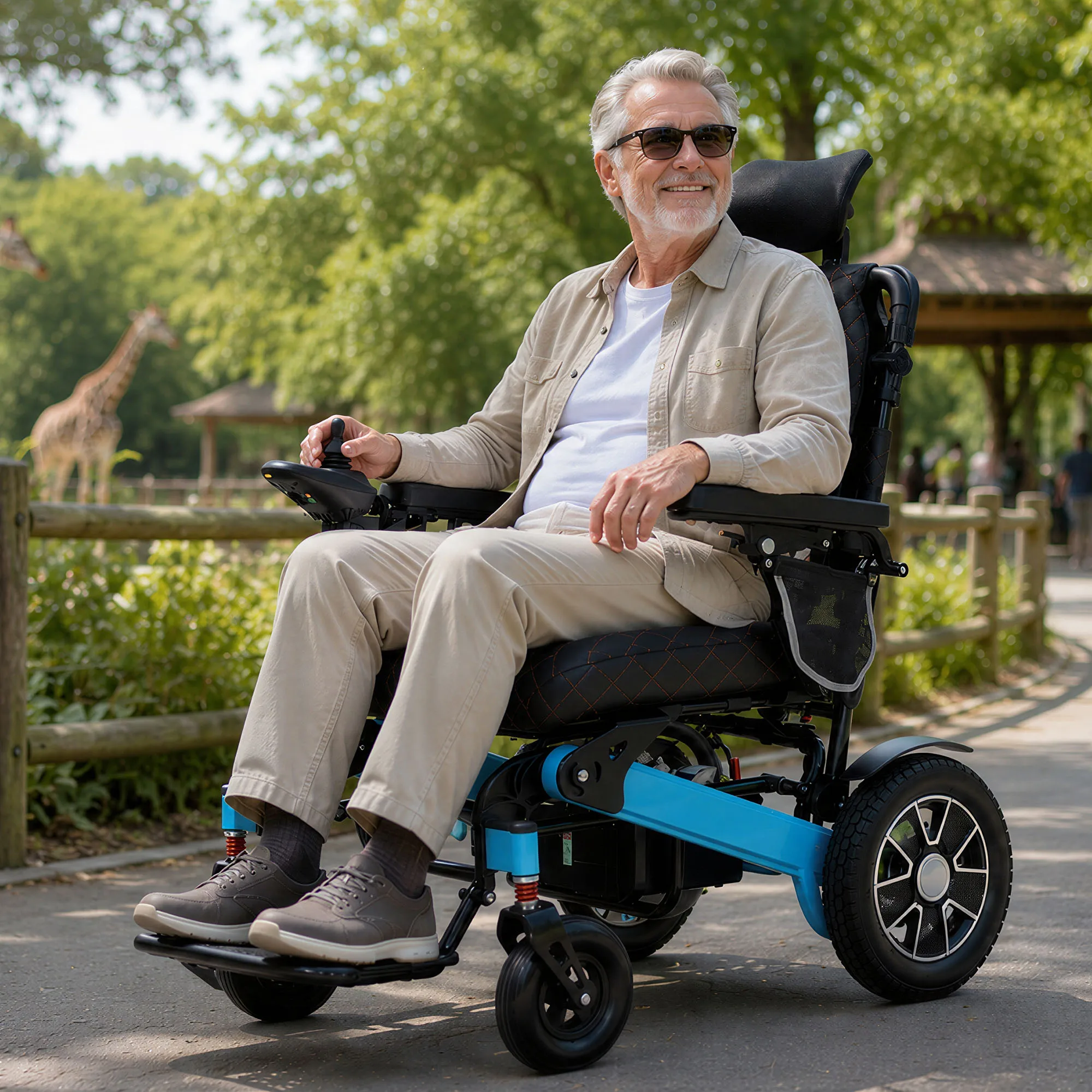
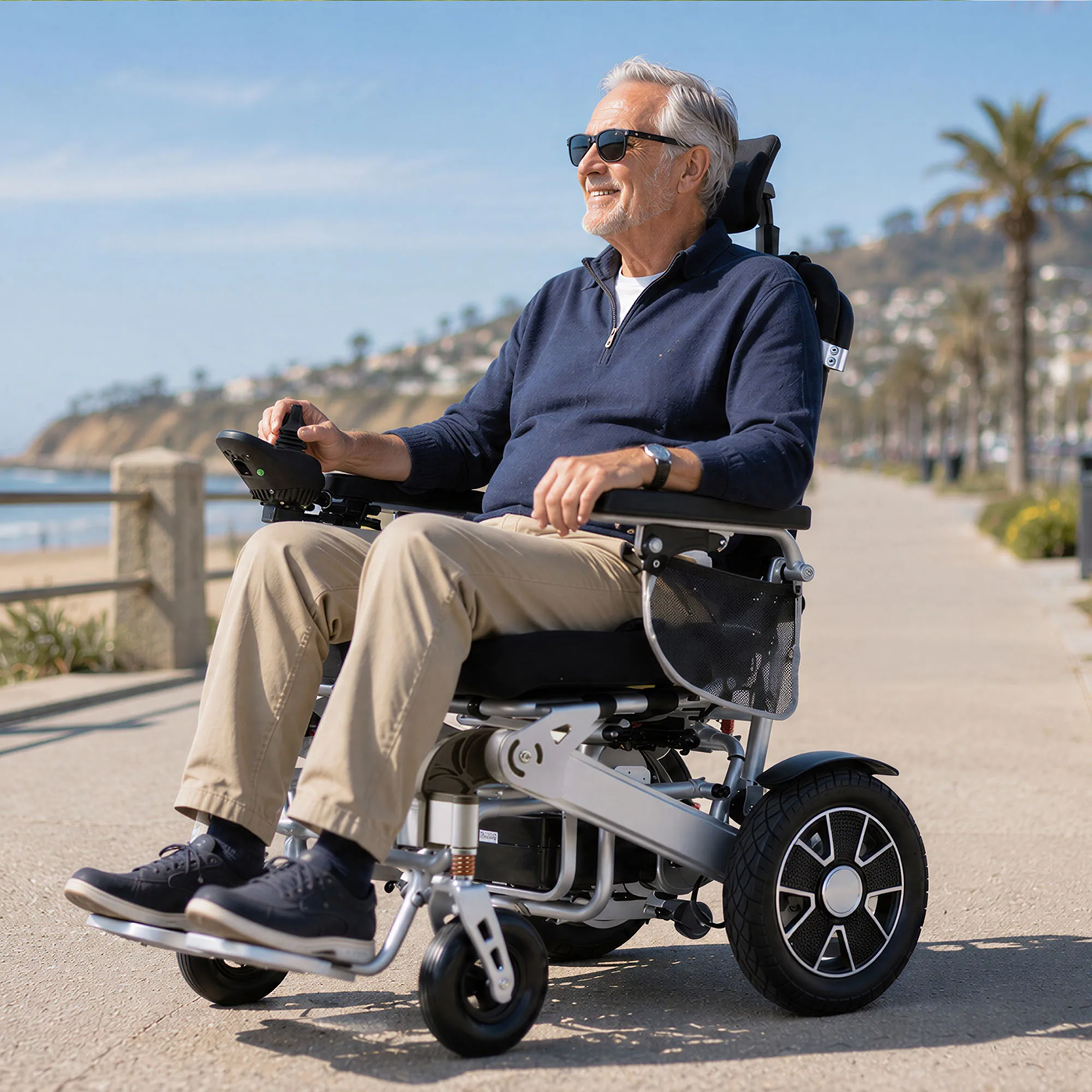
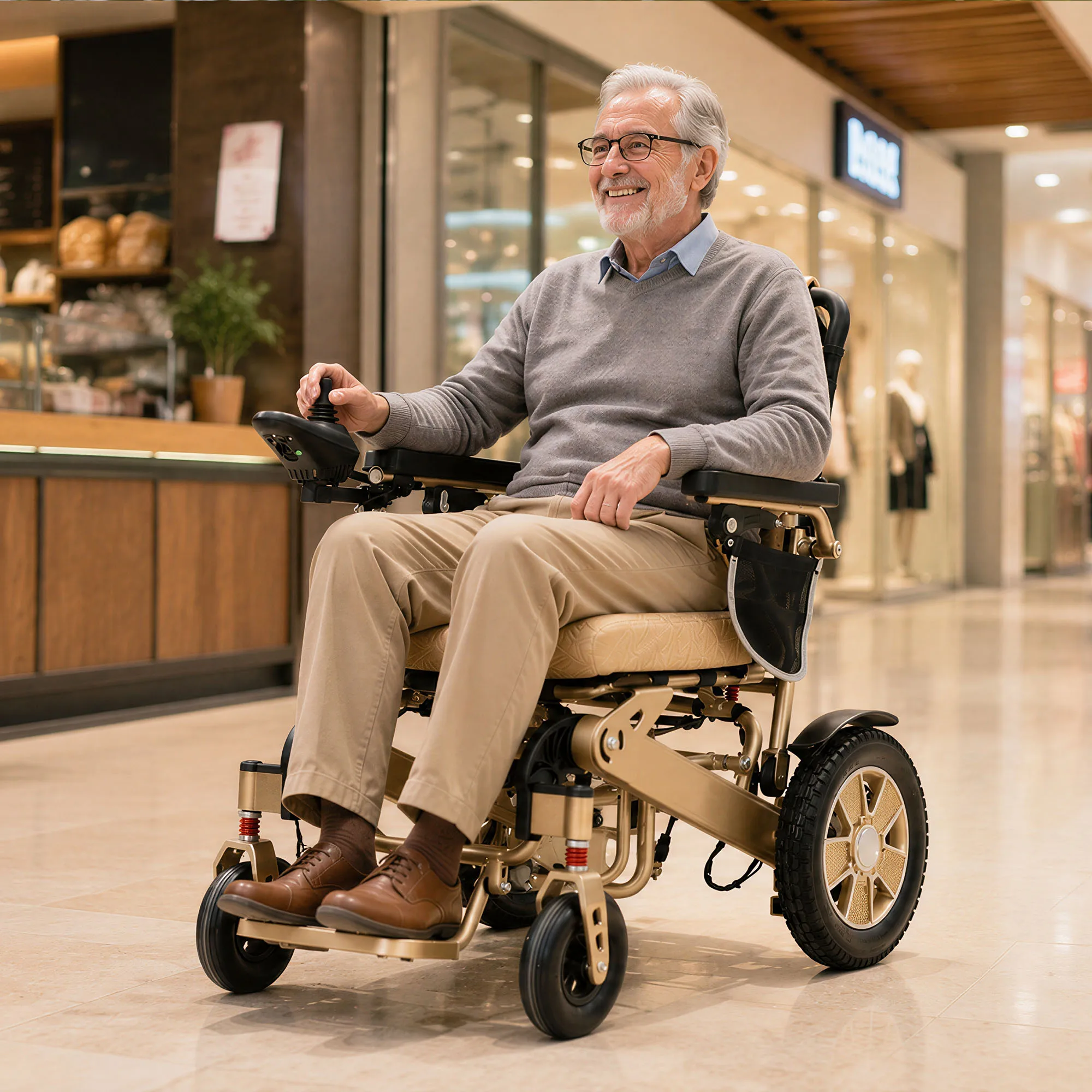
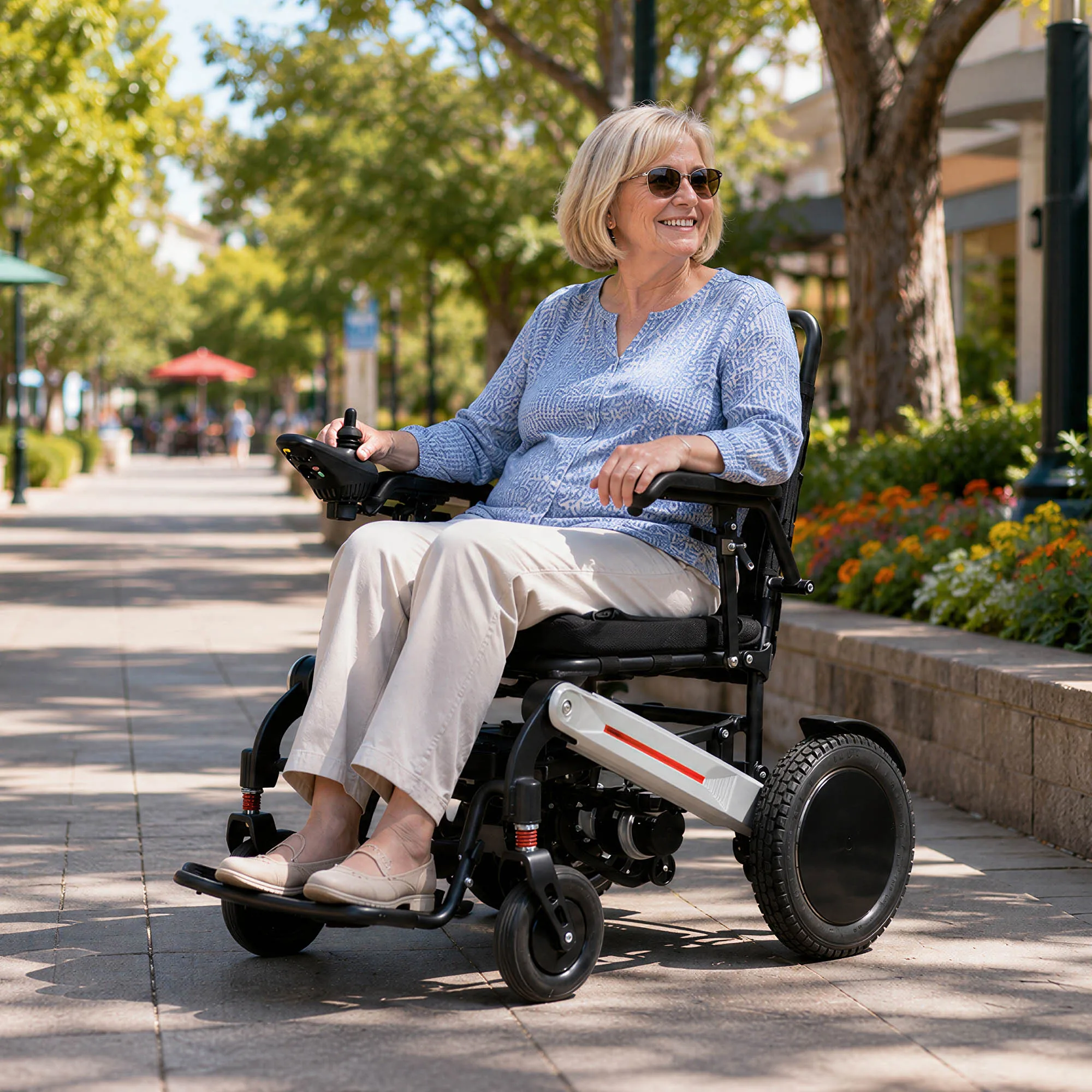
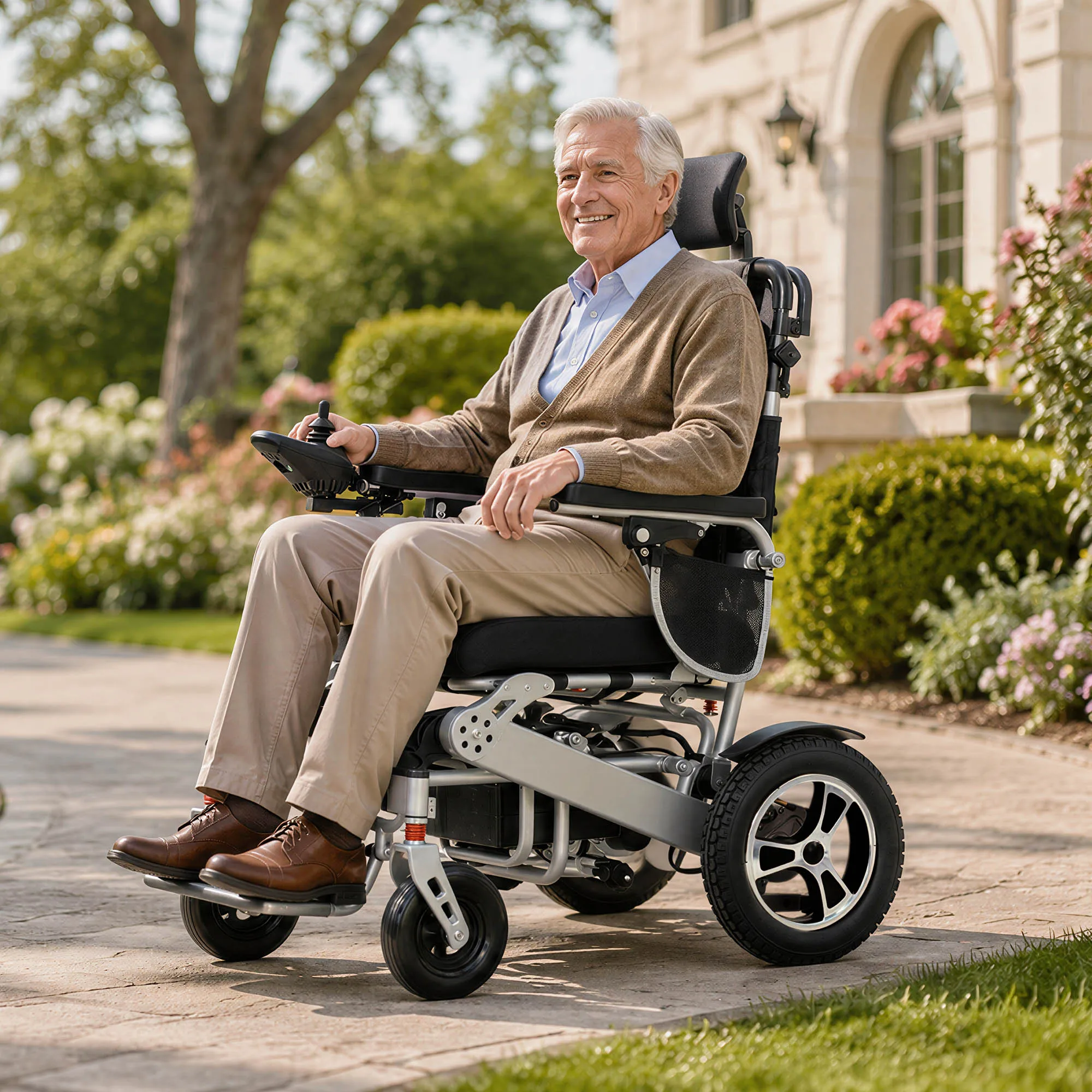
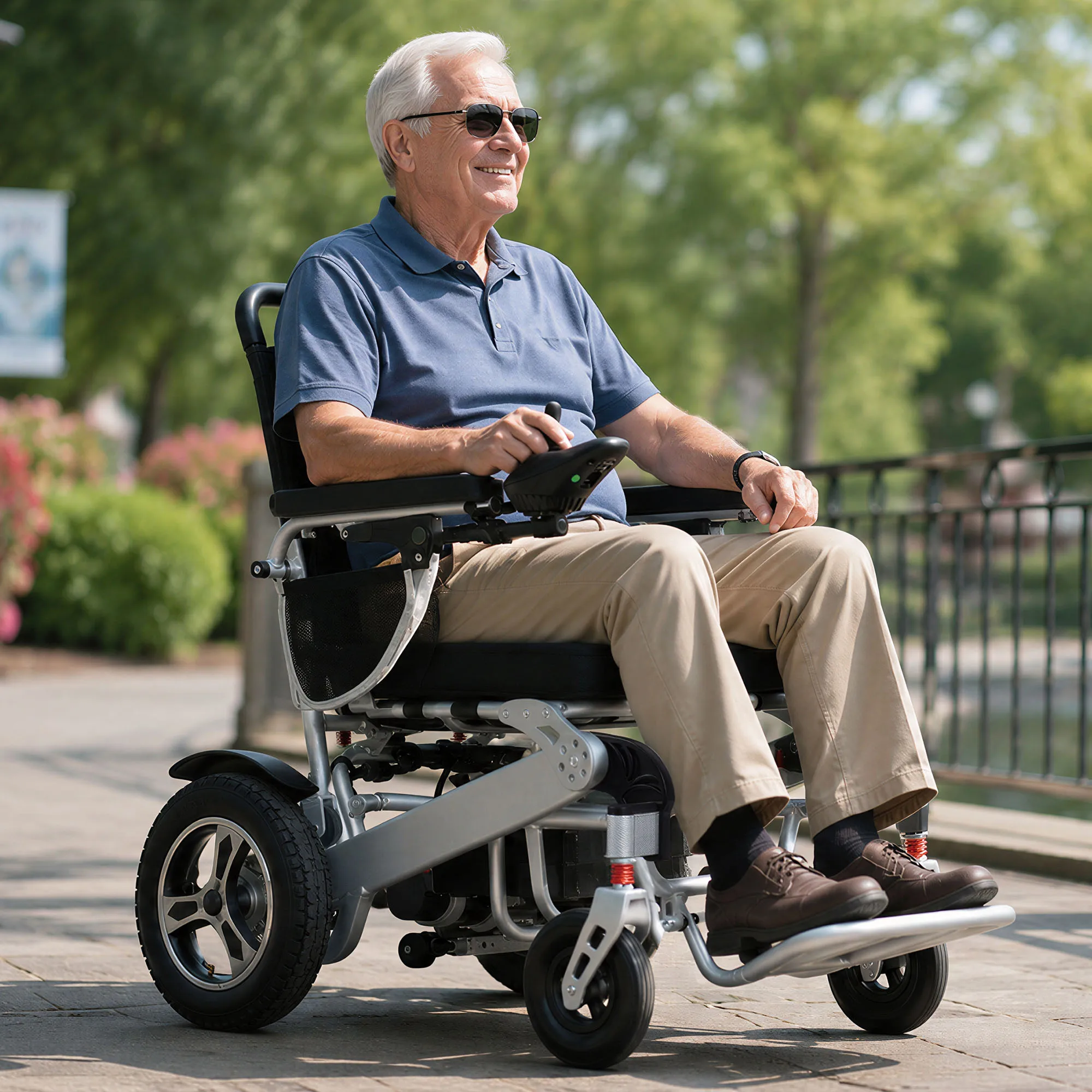
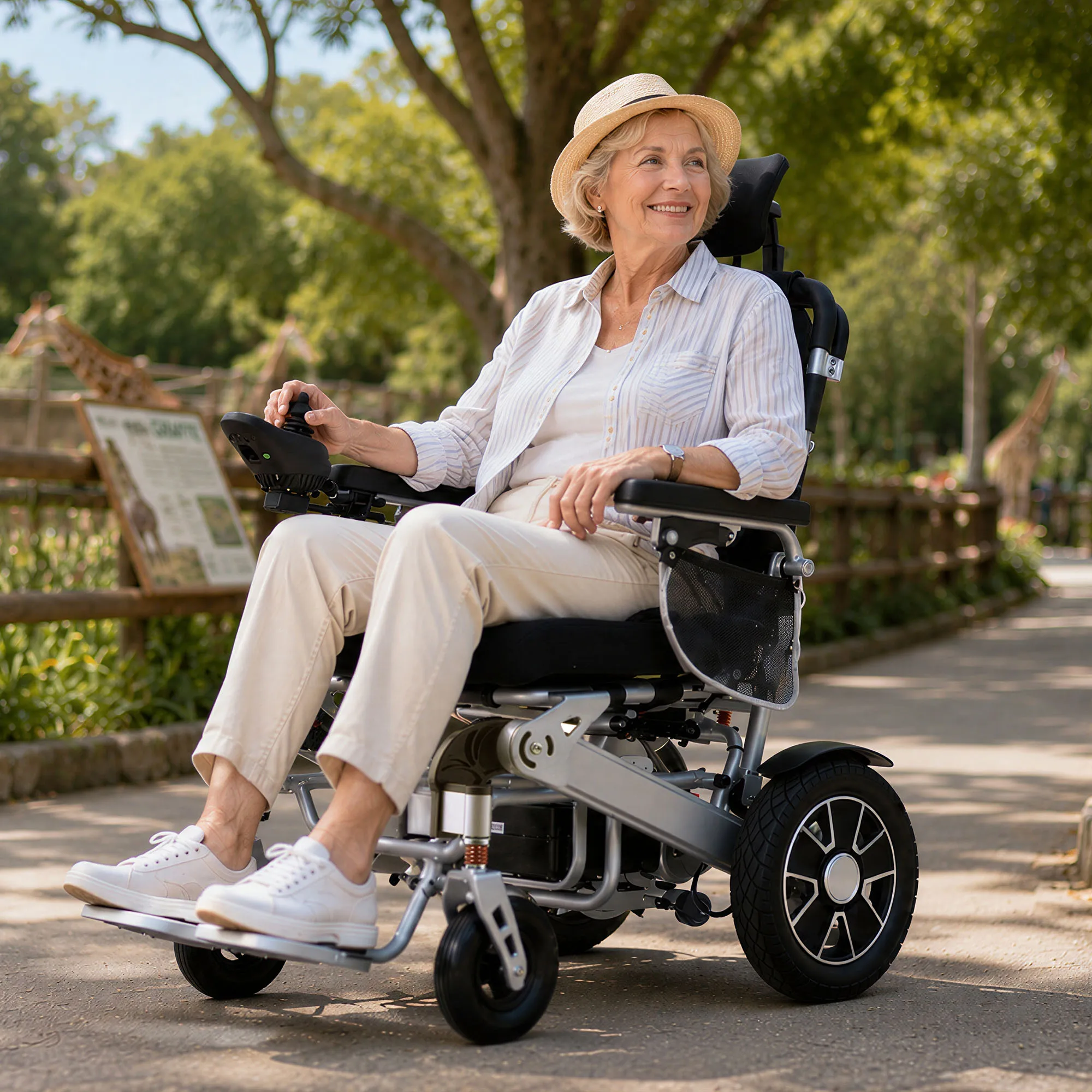
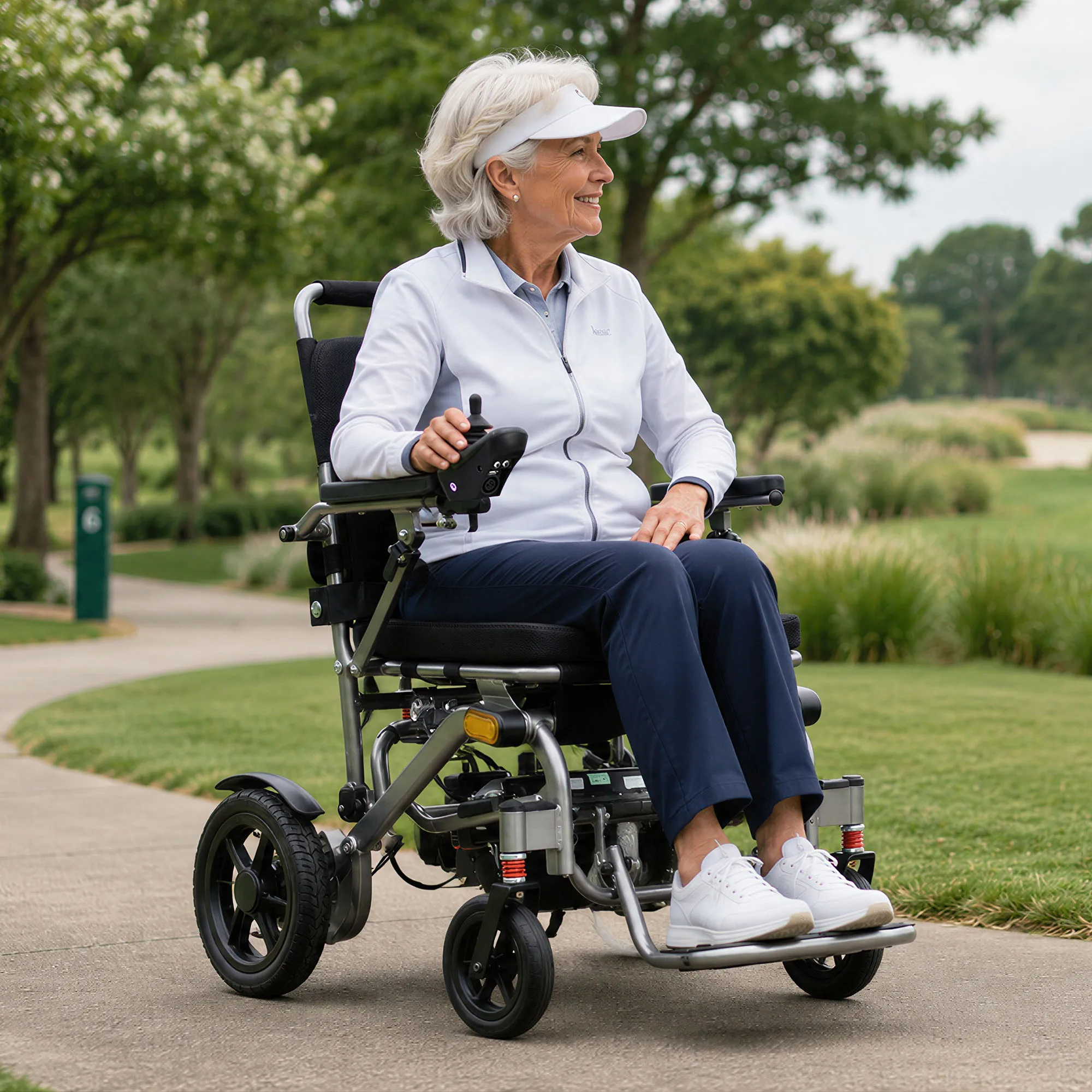
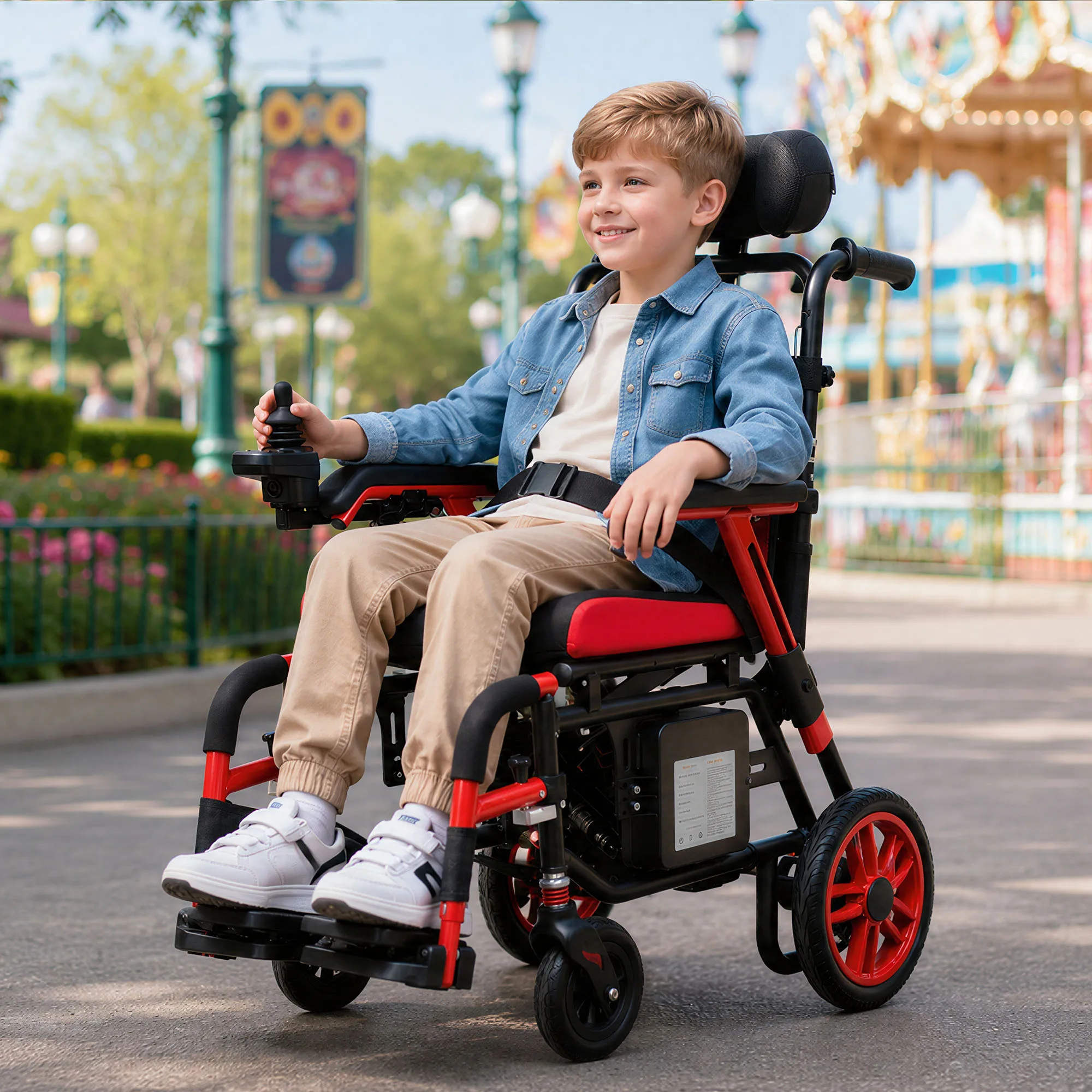
The test of a travel power chair is not the showroom — it is the seventh transfer of the day, when you fold it into a taxi trunk one-handed while holding a ticket. Our travel line is engineered for that moment.
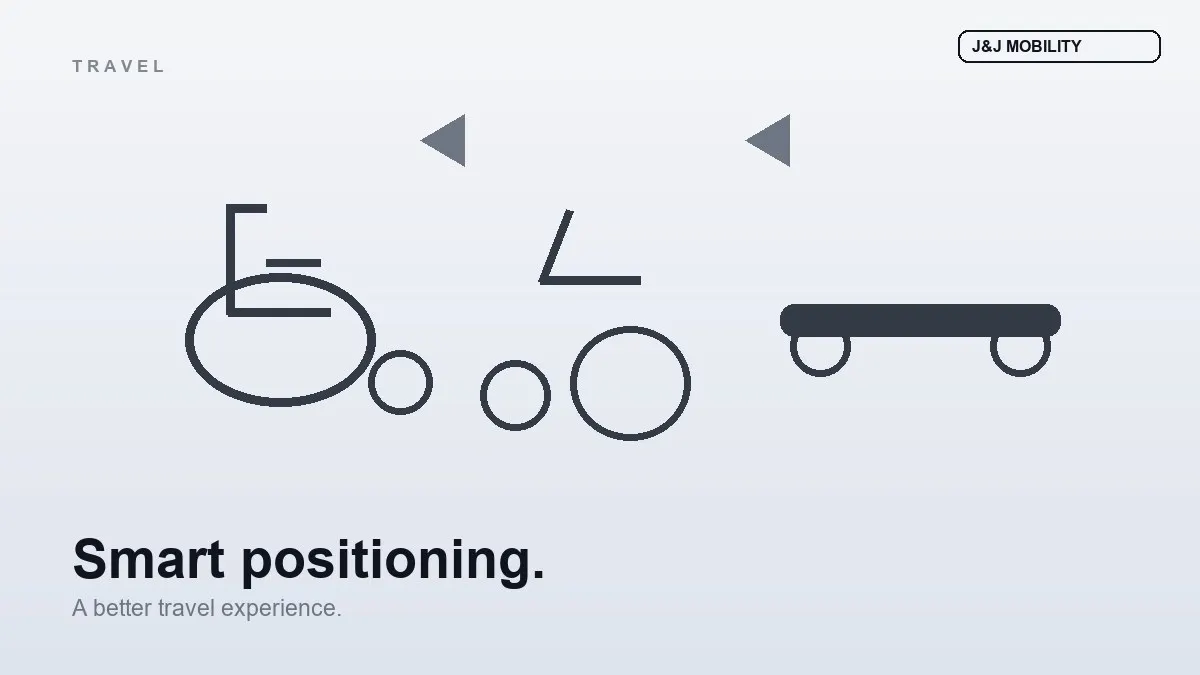
Buyers obsess over weight, but the number that decides your trip is the folded footprint. A 14 kg chair that folds slim slides behind a taxi seat; a 12 kg chair that folds bulky still needs the trunk of an SUV. Check three dimensions against your real luggage: folded length, folded height, and folded depth. Our travel models fold in one motion without removing parts — nothing to lose in a train station.
Sealed batteries under 100Wh fly without approval; 100–160Wh needs airline consent at check-in. Our travel models use removable lithium packs in the compliant range — and because the battery detaches in seconds, the folded frame travels as regular luggage while the pack rides in your cabin bag. For high-speed rail in China and Europe, no restrictions apply at these capacities.
Real travel days mean: cobblestones, hotel carpets, cruise thresholds, escalators (avoid — find the elevator), and chargers left in the last hotel. Our recommendations from frequent travelers: choose the 20Ah battery if your days run long; carry the charger in the chair's side pocket, not your suitcase; and pack a spare joystick knob — small, cheap, and the one part that vanishes in transit.
Destination rentals cost $30–80 per day and never fit correctly. A travel power chair pays for itself in two to three weeks of trips per year — and it is always adjusted to the rider, which rental stock never is. Dealers: travel models are the highest-margin category in D2C channels; ask for the travel-series display kit for showrooms.