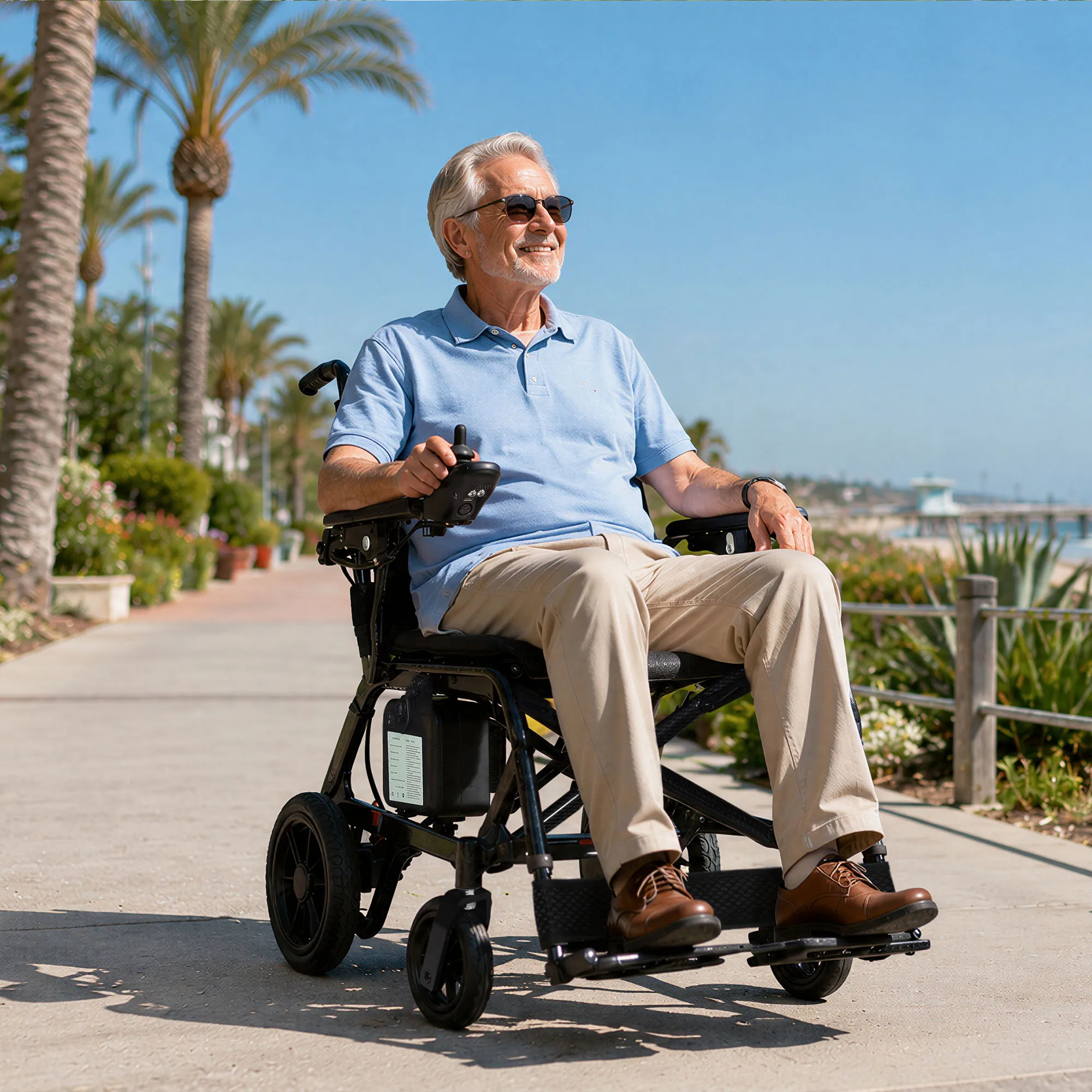
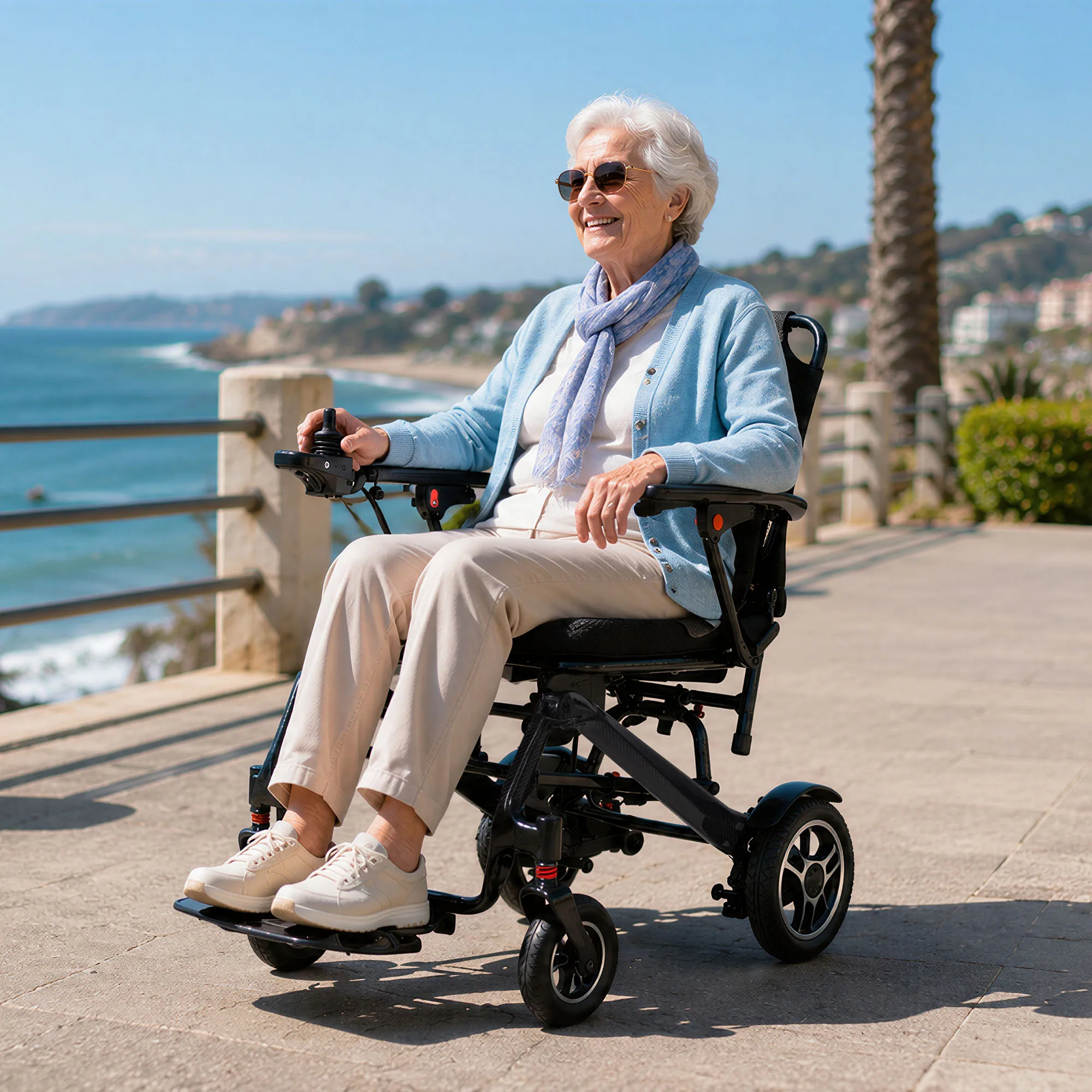
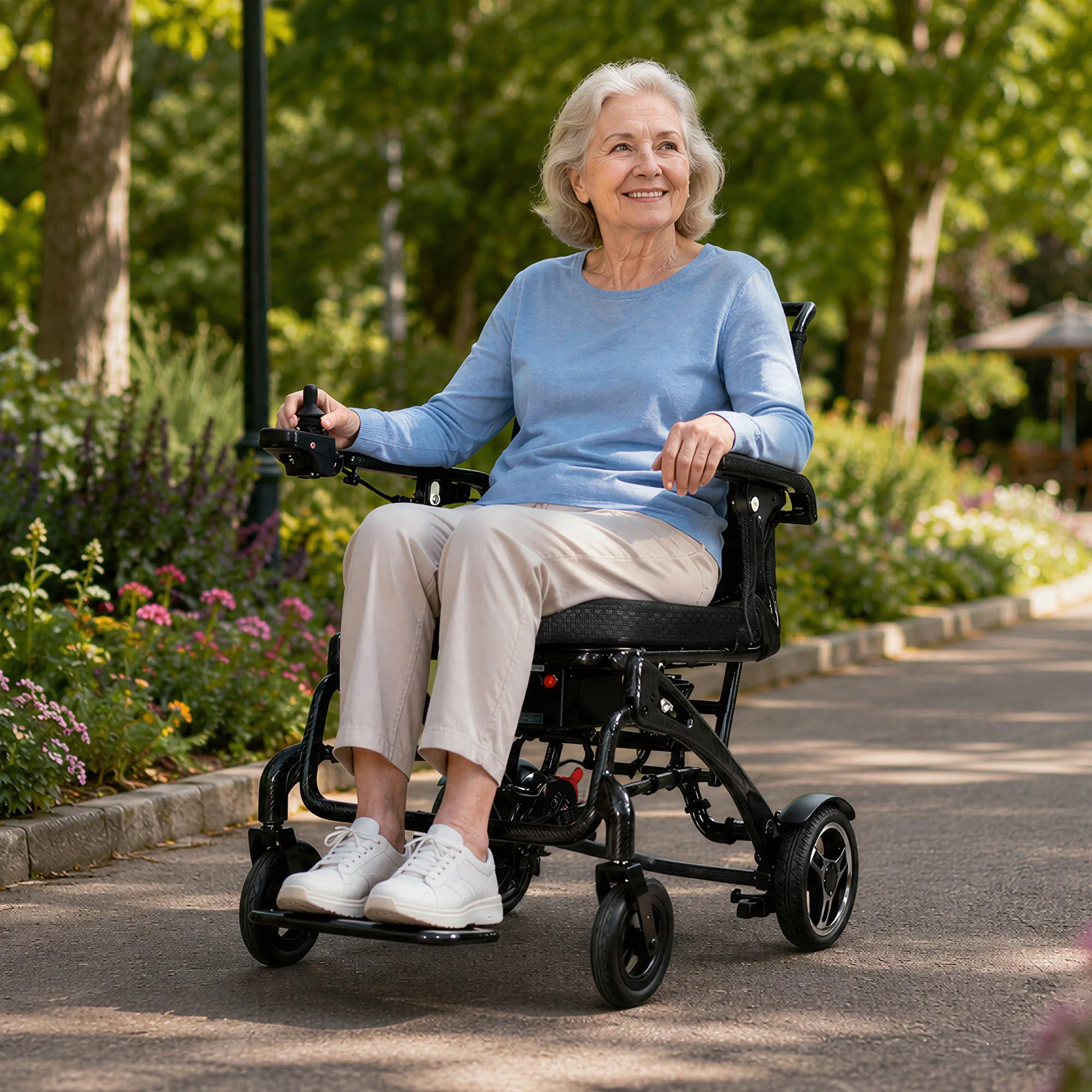
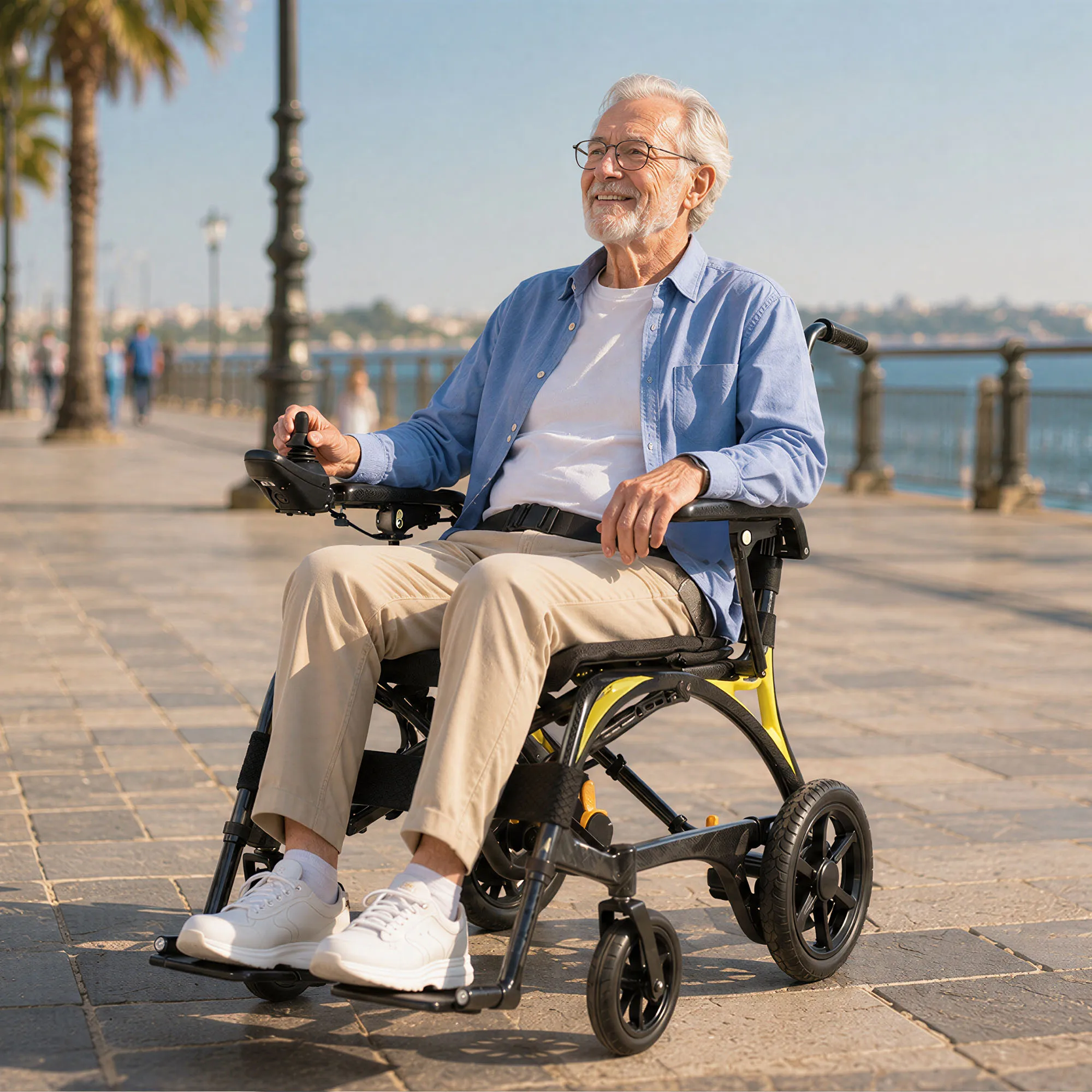
Carbon fiber is not a marketing word here — it is the reason a complete power chair can weigh less than a packed suitcase. Our 7000 series pairs carbon frames with compact lithium systems for users who refuse to let weight decide where they go.
Three things: weight, corrosion and fatigue life. A carbon frame saves roughly 20–30% over aluminium and about half the weight of steel, at equal stiffness. It cannot rust — relevant for coastal cities, winter salt, or users who shower-transfer daily. And unlike metal, carbon does not slowly work-harden and settle; a five-year-old carbon frame rides like a new one.
What it does not change: motor power, battery chemistry or electronics. Carbon buys you easier lifting and carrying — not more speed.
Carbon fiber costs more than aluminium — often 40–60% more at retail. It pays off when the chair is lifted every single day: into a car, onto a train, up a staircase, into an overhead bin. For users who roll out of a house directly into a wheelchair-accessible vehicle and never lift the chair, aluminium or steel delivers the same mobility for less money.
Our answer as a factory: we produce all three frame families, and we will honestly tell you when the cheaper frame is the right one.
Carbon frames need different care than metal: no drilling, no clamp accessories tightened past spec, and inspect after any sharp impact — carbon fails by delamination, not visible bends. Repairs mean replacement of the affected tube section at our factory, which is why every 7000-series chair ships with a two-year frame warranty. Batteries are compact 7.5–10Ah lithium packs, each under 2 kg, within airline limits.
Carbon models anchor a showroom: they draw foot traffic and upgrade the whole line's perception. We supply 7000-series chairs under OEM branding with custom paint, weave finish options and English/Spanish/German manuals, MOQ from one pallet. Frame warranty and UN38.3 battery documents included for EU and US import.