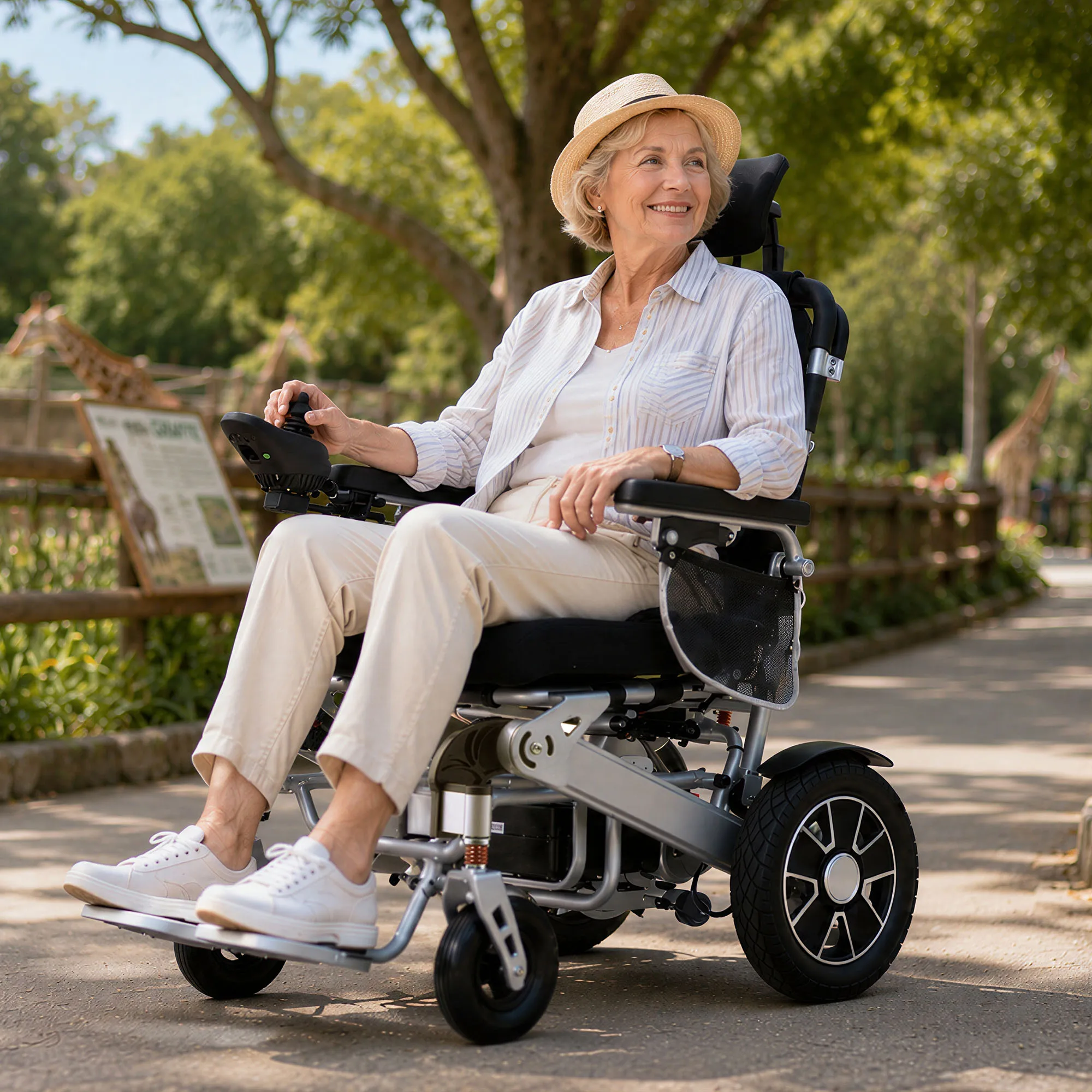
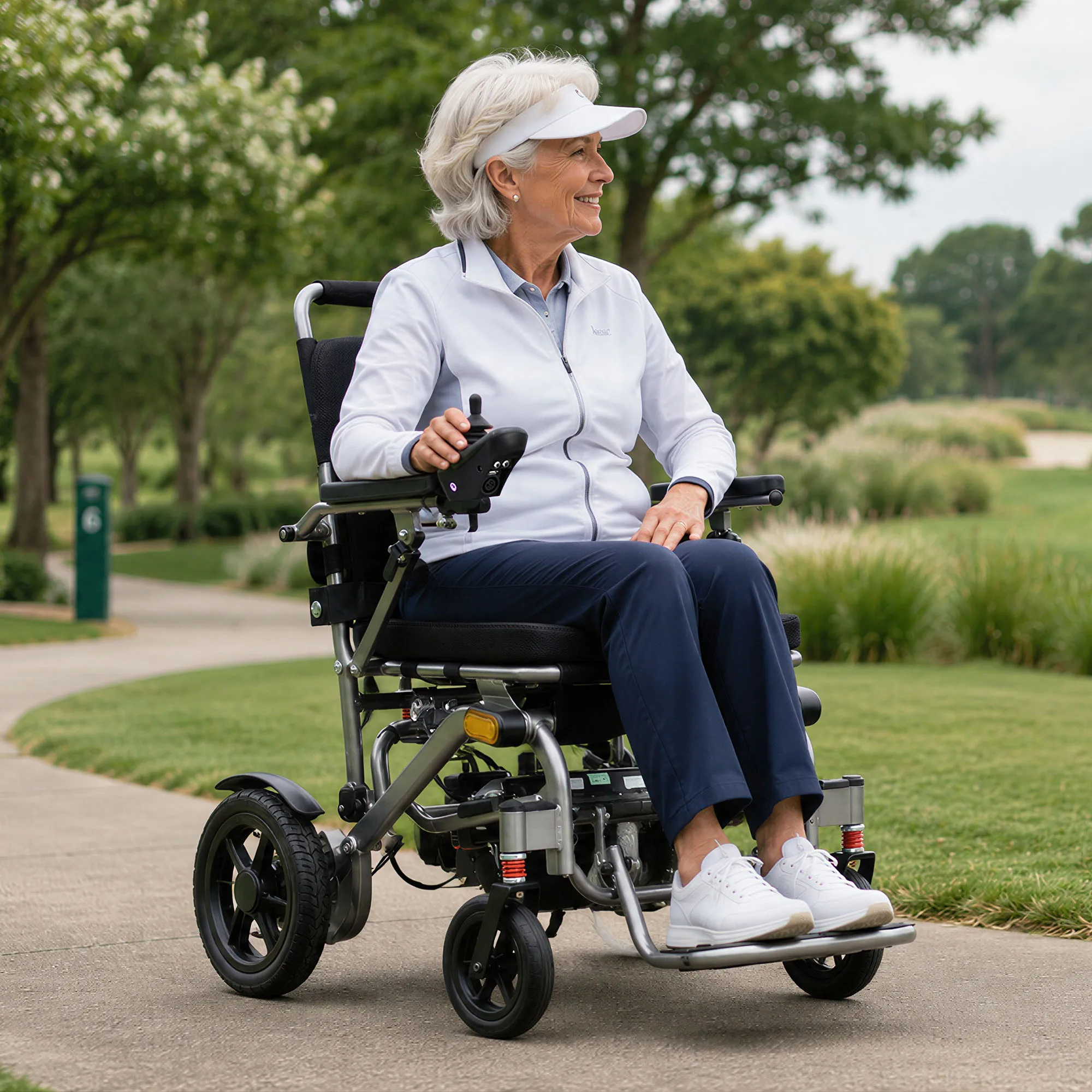
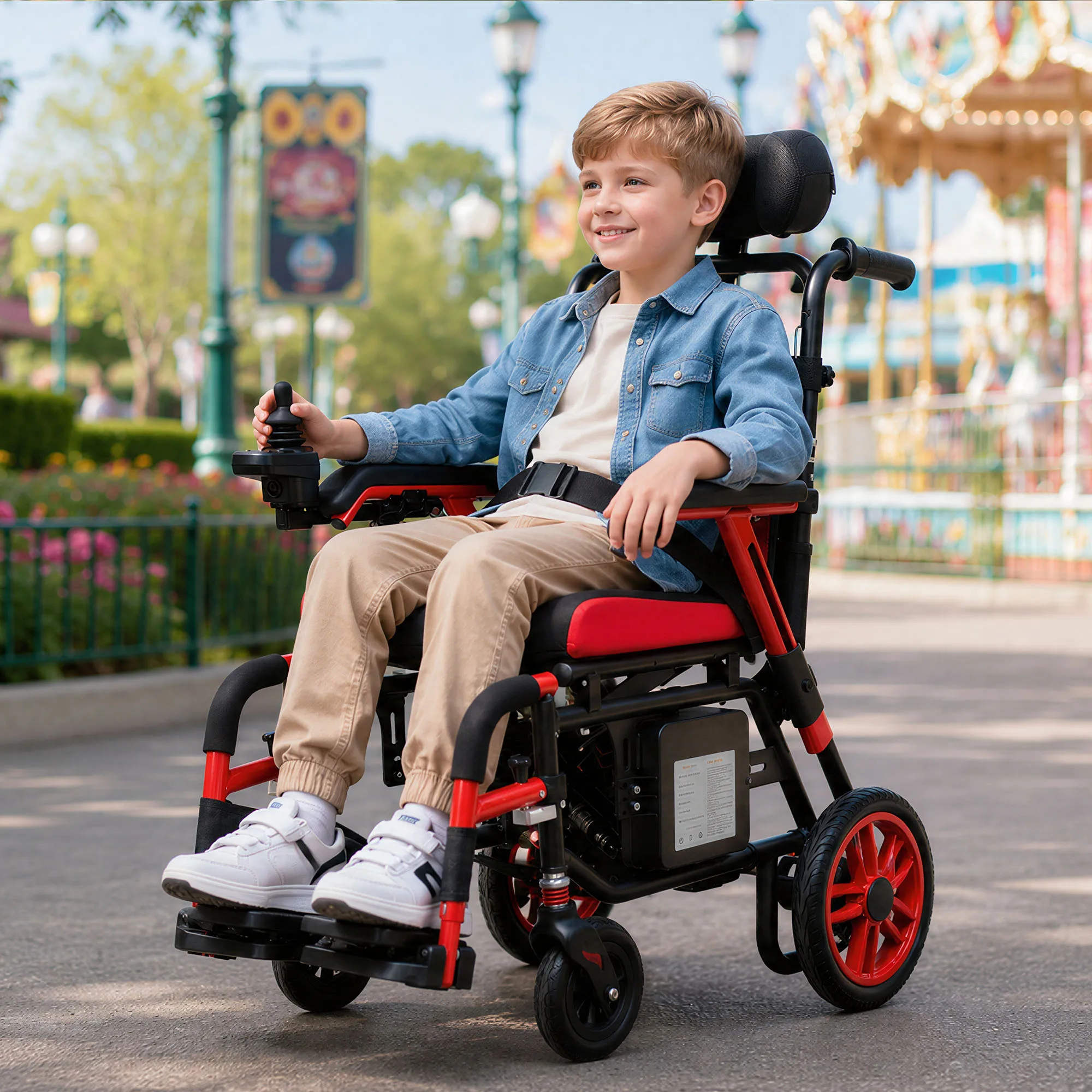
Flying with a power chair fails in one of three places: the battery, the size, or the paperwork. This page covers all three — with the exact rules airlines apply and how our flight-ready models are built to pass each check.
Airlines follow IATA dangerous-goods rules. For lithium batteries: up to 100Wh — allowed in checked equipment or cabin, no airline approval needed. 100–160Wh — maximum two batteries, airline approval required at check-in. Above 160Wh — forbidden on passenger aircraft. Sealed lead-acid batteries of the mobility type are generally accepted as non-spillable. Our flight-ready models carry removable lithium packs within the 100–160Wh window, each labelled with voltage and capacity on the pack itself — inspectors read the label, not the spec sheet.
Do not check your chair at the ticket counter — ride it to the gate. Ask for the gate-check tag at boarding; staff will fold and load it at the aircraft door, and it is returned at the door on arrival, not on the carousel. Remove the joystick and carry it in the cabin — the single most stolen and most damaged component in airline handling. If your model has a quick-release battery, take the pack into the cabin even when below 100Wh; handlers disconnect packs roughly.
Carry three things printed: the battery page from the spec sheet (voltage, Wh, chemistry, UN38.3 test reference), the chair folded dimensions, and the airline's own medical equipment form if they require one. With documents in hand, check-in typically takes minutes instead of a supervisor conference. Our export documentation includes UN38.3 references for every lithium pack we ship — ask and we will send the PDF for your model.
Hotels and cruise ships handle foldable chairs daily; the problems come from chargers — pack the charger in cabin luggage, since a trunk-delayed charger means a dead chair on day two. Voltage: our chargers accept 100–240V, so a plug adapter is all most destinations need. For cruise passengers: register the mobility device with the line before sailing and batteries are handled under the same rules as airlines.